HVAC Seasonal Demand Engine

Seasonal demandinfrastructurefor HVACcompanies.

Lead response, follow-up, service-page content, and local visibility infrastructure for HVAC companies that cannot afford to lose seasonal demand.

Operator-facing only. This site does not provide HVAC service, emergency dispatch, repair advice, licensing, rebates, warranties, or utility guidance.

IntakeSeparate repair, replacement, maintenance, and emergency requests.
Follow-upRecover missed calls, estimate requests, tune-up reminders, and seasonal surges.
VisibilityConnect service pages, GBP posts, metadata, sitemap, and Search Console readiness.

The seasonal demand problem

HVAC busy season exposes weak intake systems.

When heat waves, cold snaps, maintenance-plan reminders, replacement estimates, and emergency requests collide, scattered notes and reactive content turn demand into lost opportunity.
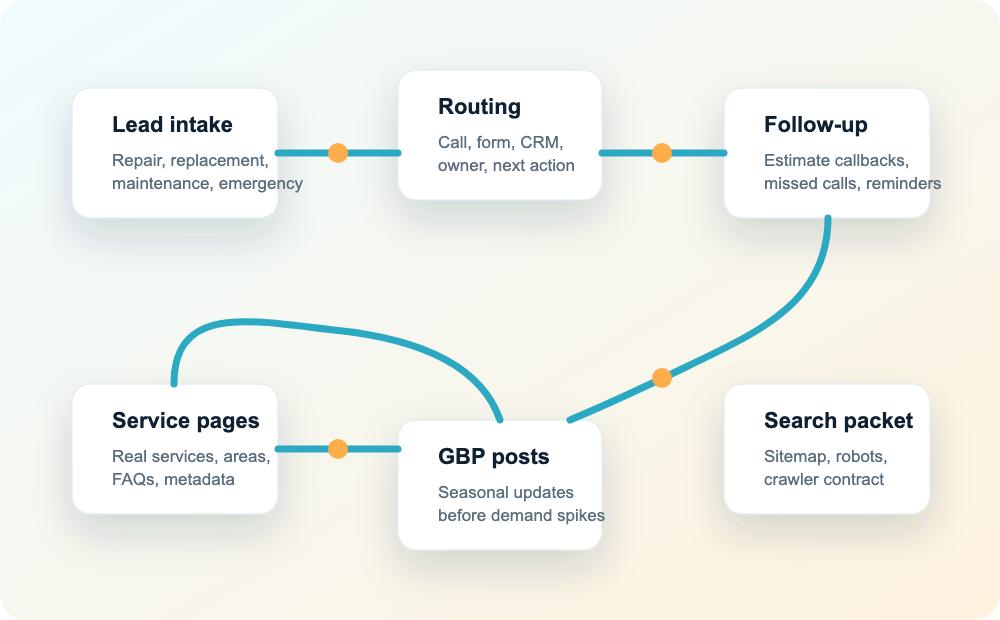
HVAC lead response workflow diagram connecting intake, routing, follow-up, service pages, GBP posts, and search packets.
A demand engine connects the business workflow behind calls, pages, GBP updates, follow-up, and search visibility.
01

Leads spike before teams are ready

Seasonal demand compresses response windows and makes missed-call recovery matter.

02

Repair and replacement need different paths

Emergency repair requests, replacement estimates, and maintenance plans should not share one generic follow-up sequence.

03

Local visibility needs rhythm

Service pages and GBP posts work better when they are prepared before the phones spike.

What the system includes

Built around lead response operations, not generic HVAC SEO.

The HVAC Seasonal Demand and Follow-Up Workspace gives a contractor or service team the operating layer behind seasonal search intent.

Lead intake mapCapture service category, urgency, location, equipment type, source, and next contact route.
Emergency request workflowSeparate urgent requests from estimates, maintenance, and education-first inquiries.
Service-page structureOrganize repair, replacement, maintenance, indoor comfort, and local service-area pages without fake claims.
GBP post packSeasonal post drafts for verified businesses or authorized client accounts.
Follow-up templatesMissed-call, quote, maintenance-plan, and callback message templates.
Search packetMetadata, sitemap, robots, crawler contract, and Search Console packet.

How the workspace works

One operating path for calls, forms, service pages, and follow-up.

The workspace turns seasonal pressure into a tracked business process: what came in, what it was, who owns it, what the customer sees next, and what page or post supports the demand.

Map intake

Repair, replacement, maintenance, emergency, and service-area lead types get different handling rules.

Build response assets

Templates, page sections, customer education blocks, and GBP post drafts are prepared before peak demand.

Connect crawler readiness

Pages ship with metadata, canonical URLs, sitemap, robots, JSON-LD, and crawler contract checks.

Who it is for

For HVAC operators who need customers, not another random page.

  • HVAC contractors preparing for summer or winter demand spikes.
  • Heating and cooling companies with inconsistent callback and estimate follow-up.
  • Small service teams that need cleaner page structure and local visibility workflows.
  • Agencies serving HVAC clients that need an agent-readable operating harness behind the site.

First setup offer

HVAC Seasonal Demand and Follow-Up Workspace

Lead intake map, emergency request workflow, service-page structure, maintenance-plan follow-up templates, seasonal content calendar, GBP post pack, CRM/pipeline recommendation, AI-assisted response templates, and an agent-readable workflow harness.

Text or contact WebMnem AI to map your HVAC workflow